
Real Ink
Changing the Writing Process

Moving causes all sorts of upheavals. As I wrote last week, I’ve been going through boxes of letters, journals, diaries—an emotional marathon! But what emerged is an immense appreciation for what is handwritten. The stamps, old addresses, the varieties of paper, especially the thin blue air mail sheets that folded over into envelopes. Written letters speak in a way that texts and emails do not. If I were writing this to you, it would be a more immediate experience to hold the paper and read.
I did not throw my letters away. I bundled them by writer and put each into its own bag. The stash of letters from Rena, my college roommate now sadly gone, was a formidable stack and a veritable record of her adult life, ranging from college up until email took over in the mid-to-late nineties. I sent them to her husband, who is enjoying them immensely. I suppose I will later send all the emails that began when email shut down our more personal correspondence. Although they contain her usual wit, massive intelligence, and immense appreciation for the ludicrous in life, they will not convey the verve of her handwriting, with extravagant punctuation and little sketches.
Handwriting is personal, idiosyncratic—as unique to you as your face and fingernails and voice. Reading Joanie, Russell, Carlos, Kit, Anne, Paul, Gary, all my friends, boyfriends, my mother and sisters, brought them back. I still recognized most of their handwriting from the envelope.
As I waded through my own manuscripts and notebooks, I had a further jolt. My entire way of working has changed, I guess so gradually that I hadn’t noticed. Revising and cutting and taping became digital. Writing used to be more tactile. From several journals, pressed leaves and flowers fell out, along with grocery lists, and bookmarks made by my grandson. What is lost in the maneuvers on the white screen?


I am about to sign a contract for a new book of memoir/essays on writing and the pilgrimages I am making. Now, it seems exciting to me to go back to my early methods and to see if they make a difference. This kind of book is all voice. Does ink provide a better link to an imagist, synesthetic, intuitive way of thinking? Are my handwritten scrawls, cut-and-paste slips, and jottings more spontaneous than straight computer writing? It certainly looks like more fun. To that end, I have acquired a pristine blue notebook for ideas, words, book lists, and a large, lineless one for actual writing. I’m very excited to move backwards into this project.
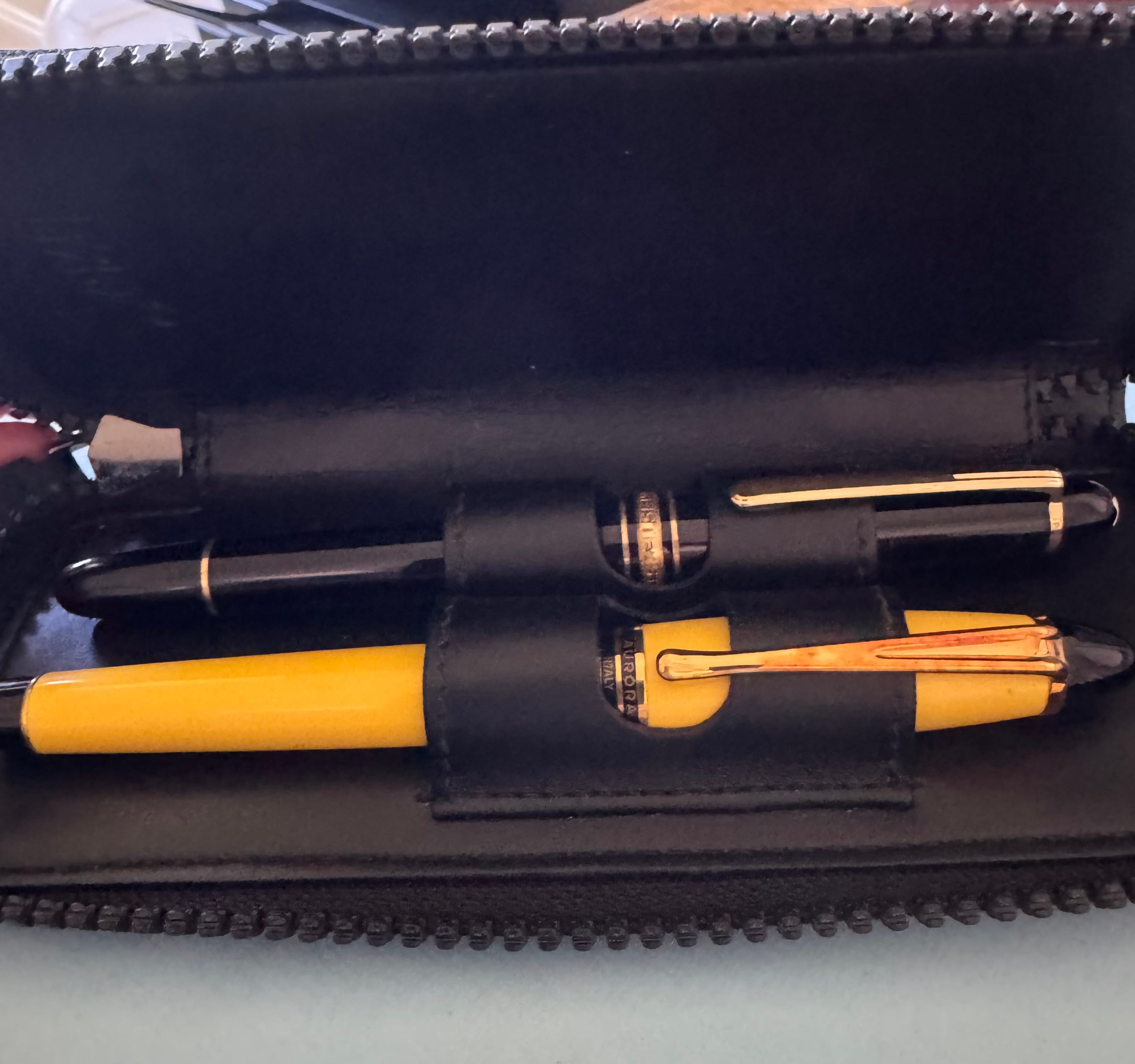
I found my old pens, too. A vintage Mont Blanc and a yellow Aurora, an Italian pen I used to write Under the Tuscan Sun.
NOTES Spend some time looking at the many articles on benefits of handwriting—how neuroimaging shows enhanced brain function and structure, and on various cognitive benefits of handwriting, such as taking notes by hand better securing the information. A fascinating subject.
Thank you for this delightful write. I confess to not being much of a letter writer. Fortunately, my mother left me bundles of letters from when her mother was a student in a one-room schoolhouse in Bement, Illinois, in the 1890s. Students wrote complimentary letters to fellow schoolmates, commenting on everything from one's spelling prowess to the blue ribbon in a girl's hair. Not only did the students practice penmanship, they learned about civility - something that needs to be taught again.
Frances, what a fascinating read! This journey seems so illuminating in so many ways.
Wishing you much luck and less stress as you go home to Bramasole. I cannot wait for your
new book!